Laksa Simulator
A browser game that turns your phone into a tray carrying a brimming bowl of laksa. Four games in one site, made for fun as an unofficial homage to the Darwin International Laksa Festival.
Client
Brainium Labs (passion project)
Services
Concept, game design, UI design, 3D art, front-end and back-end development, hosting
Industries
Games, Food & Culture
Date
2026
Challenge
We built Laksa Simulator for fun, as an unofficial homage to the Darwin International Laksa Festival and Darwin's favourite dish.
We set ourselves a challenge: make carrying a brimming bowl of laksa feel real on a phone. It had to run in the browser with no app to install and work at home, in the backyard or down the street. The phone itself would be the controller, using motion sensors, GPS and the camera, and the game would celebrate the festival's real venues and Darwin's real streets.
Our solution
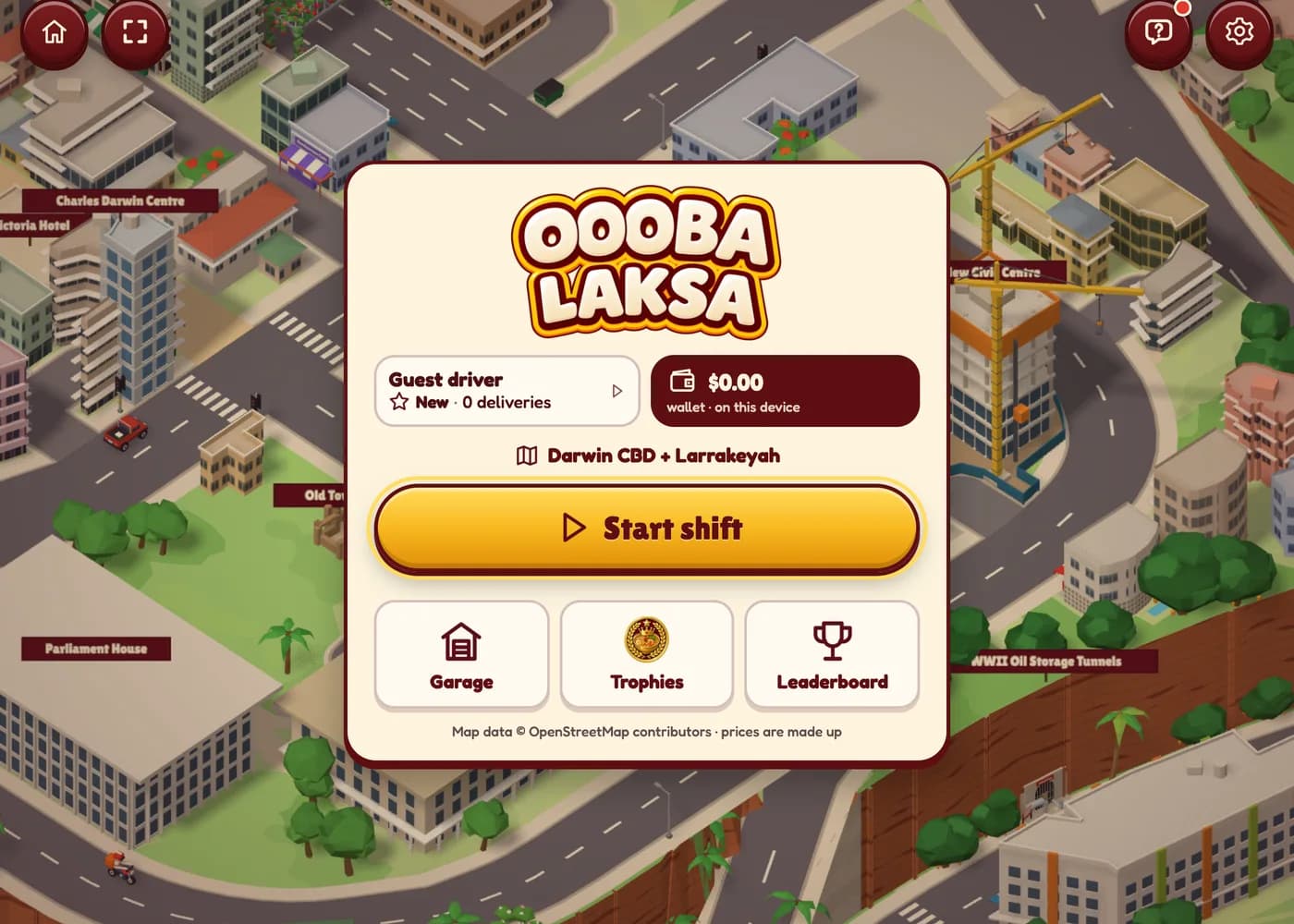
Four games in one site: Laksa Walk, Laksa Dash, Design a Laksa and Oooba Laksa, an isometric delivery game set in a 3D Darwin.
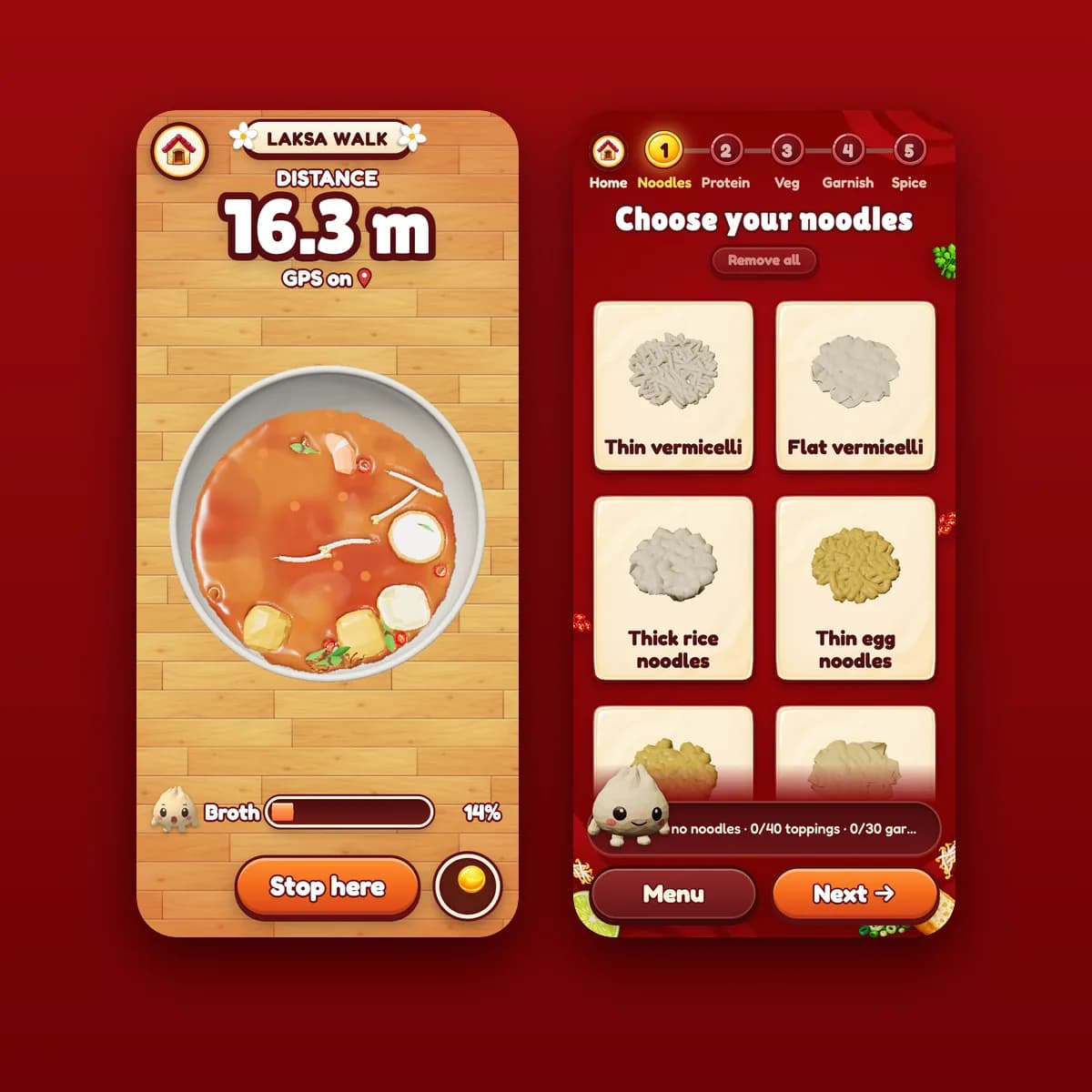
Laksa Walk uses GPS to measure how far you can walk without spilling, while the broth sloshes more as your arms tire. Laksa Dash is a 50 m sprint with a full bowl: run fast, but don't spill.
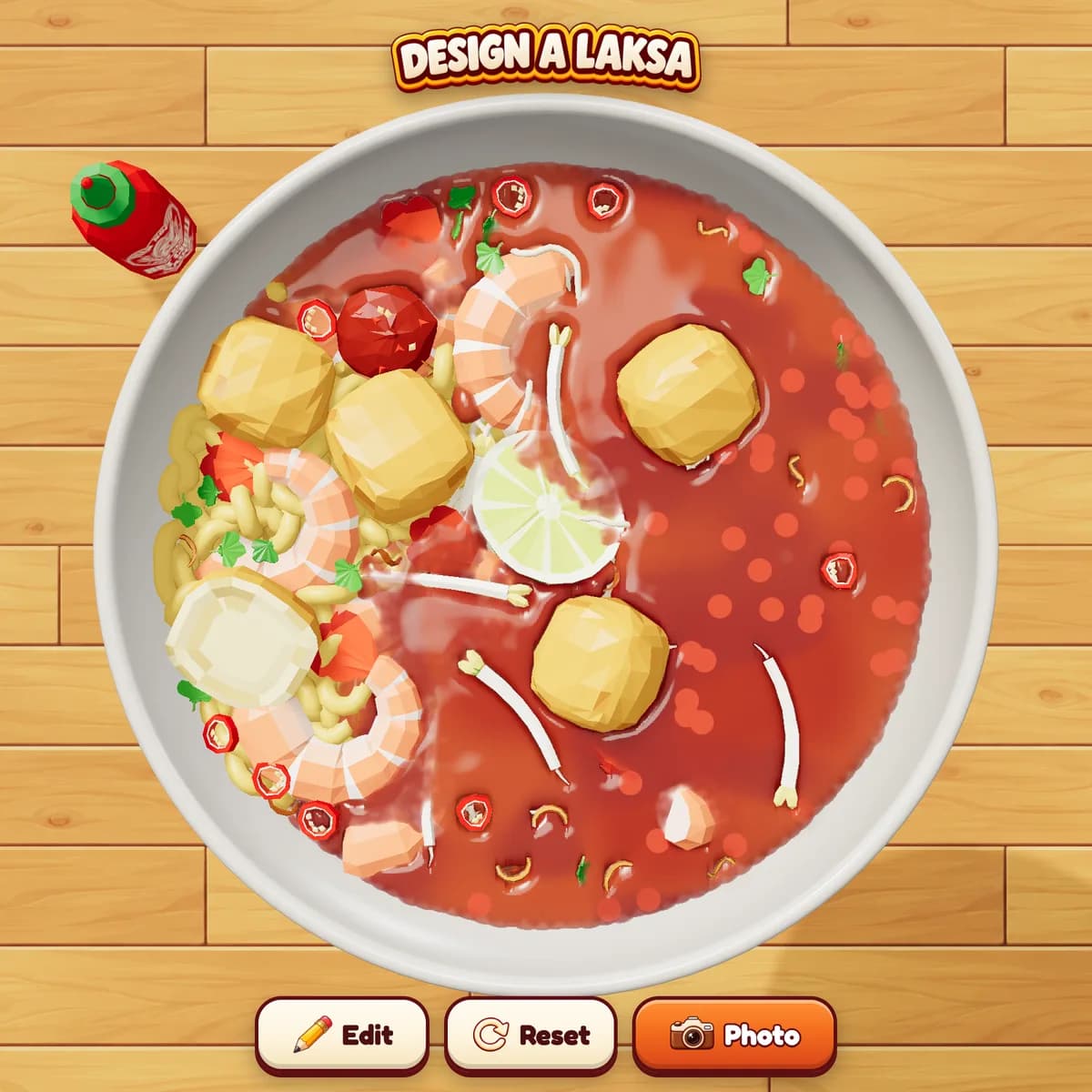
Design a Laksa lets players build their own bowl from more than 100 ingredients, then tip, slosh, splash and photograph it.
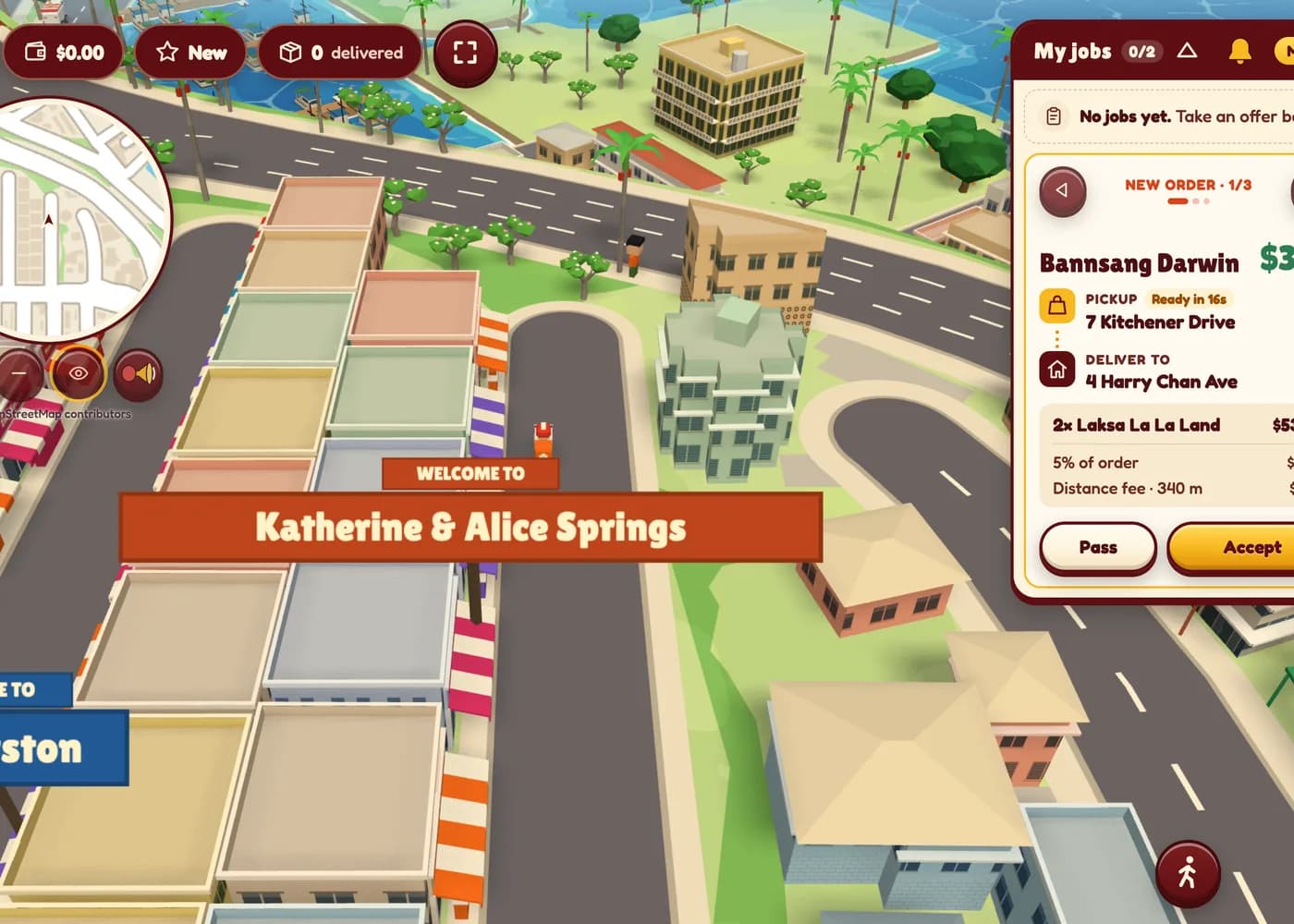
Oooba Laksa rebuilds Darwin's CBD and Waterfront from OpenStreetMap data, complete with landmarks, traffic and two levels. Players take orders from more than 110 real festival venues and deliver them across the city, with side quests like jet ski rescues, fishing and golf along the way. A wallet, a garage of vehicles, 40+ badges, leaderboards and live multiplayer ghosts keep them coming back.
Under the hood, a custom GPU particle fluid solver makes the broth slosh, spill and pool as the phone tilts. The server replays each delivery shift before paying out or ranking it, so scores can't be faked. Every food item, character and landmark is an original low-poly model, built with scripted Blender.
The front end is TypeScript, Vite and Three.js with WebGPU and WebGL. The back end runs on Node.js, Hono, WebSockets, PostgreSQL and Prisma, and the whole thing installs as a web app.
 Let's talk about your project!

